Call us or make an online inquiry for a quick cost estimate.

Mar 13, 2026
How Can I Get Rid Of Mould: Professionals Guide
Mould rarely announces itself dramatically. More often, it begins as a small patch, a faint stain, or a dark mark that seems easy enough to ignore. Yet even minor signs can quickly change how a room looks and feels, especially when they keep returning, no matter how often they are cleaned.
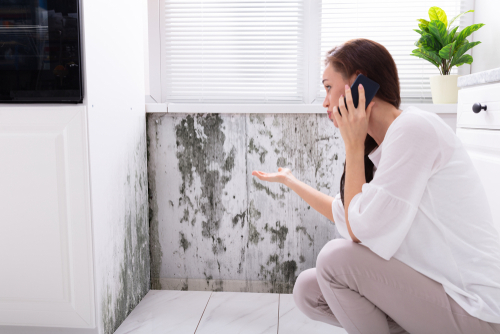
That is what makes mould so frustrating for many homeowners. It can seem like a simple surface problem at first, particularly when mouldy walls start affecting the appearance of a room. In reality, getting rid of it is not always as straightforward as wiping it away.
In this guide, we take a closer look at what mould is, why it appears, cleaning methods, and when a more thorough solution may be needed.
What is Mould?
Identified as a type of fungus, mould develops in damp conditions and spreads through microscopic spores in the air. These spores are naturally present in many indoor and outdoor air, but they only begin to grow when they land on a surface that provides enough moisture to support them.
Inside homes, mould may appear as dark specks, cloudy patches, fuzzy growth, or stained areas on walls, ceilings, grout lines, fabrics, or stored items. Its colour can vary, which is why mould is not always easy to identify by appearance alone. Some patches are light and dusty, while others are darker and denser.
Mould also affects more than the appearance of a surface. It can weaken finishes, stain painted areas, affect the freshness of a room, and signal that indoor conditions are not being managed well. Once it settles into a home environment, it often spreads further unless the source behind it is addressed.
What Causes Mould to Grow in Homes
Excess moisture is the main reason mould develops indoors. This often happens through condensation, where warm, humid air settles on cooler surfaces such as windows, walls, or room corners. Over time, repeated moisture buildup creates the kind of damp conditions that support mould growth.
Leaks and poor ventilation also play a major role. Water from plumbing issues, roof damage, or hidden seepage can keep materials damp, while trapped steam in bathrooms, kitchens, and laundry areas slows drying.
Everyday habits such as drying clothes indoors, overcrowding storage spaces, or placing furniture too close to walls can also make moisture linger and allow mould to return.
Types of Household Moulds
Household mould is often discussed as though it is one single type, but in practice, indoor mould can appear in different forms. For most homeowners, the more useful distinction is not the scientific name, but how the mould appears, where it grows, and what that suggests about the condition of the space.
Surface Mould
This type usually forms on visible areas such as painted walls, ceilings, grout lines, sealants, and around window frames. It often develops where moisture settles regularly, especially in bathrooms, kitchens, laundry spaces, or corners that do not dry easily. In many homes, this is the first type to appear because it grows on exposed surfaces where condensation or humidity is more noticeable.
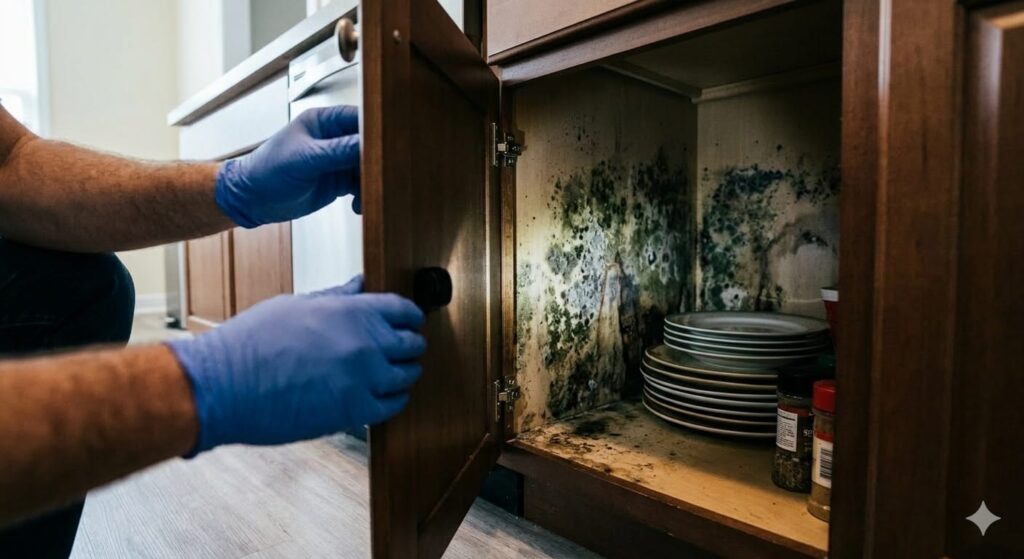
Hidden Mould
This kind of mould develops in places that do not get much attention, such as behind wallpaper, inside cupboards, behind wardrobes, under sinks, or within wall cavities. It is commonly associated with trapped dampness or poor airflow in enclosed spaces. In many cases, the first sign is not the mould itself, but a musty smell or gradual staining.
Black Mould
Dark patches on walls and ceilings are commonly described as black mould, especially when they appear in damp corners or areas with limited ventilation. While not every dark stain is the same, this type often raises more concern because it is more noticeable and may suggest that the issue has been present for some time.
Mould in Porous Materials
Soft or absorbent materials can also become affected, including drywall, wood, carpets, fabrics, and insulation. Once growth settles into these surfaces, it is often harder to remove fully through simple cleaning alone. In this case, the concern is less about how it looks and more about how deeply it may have spread into the material.
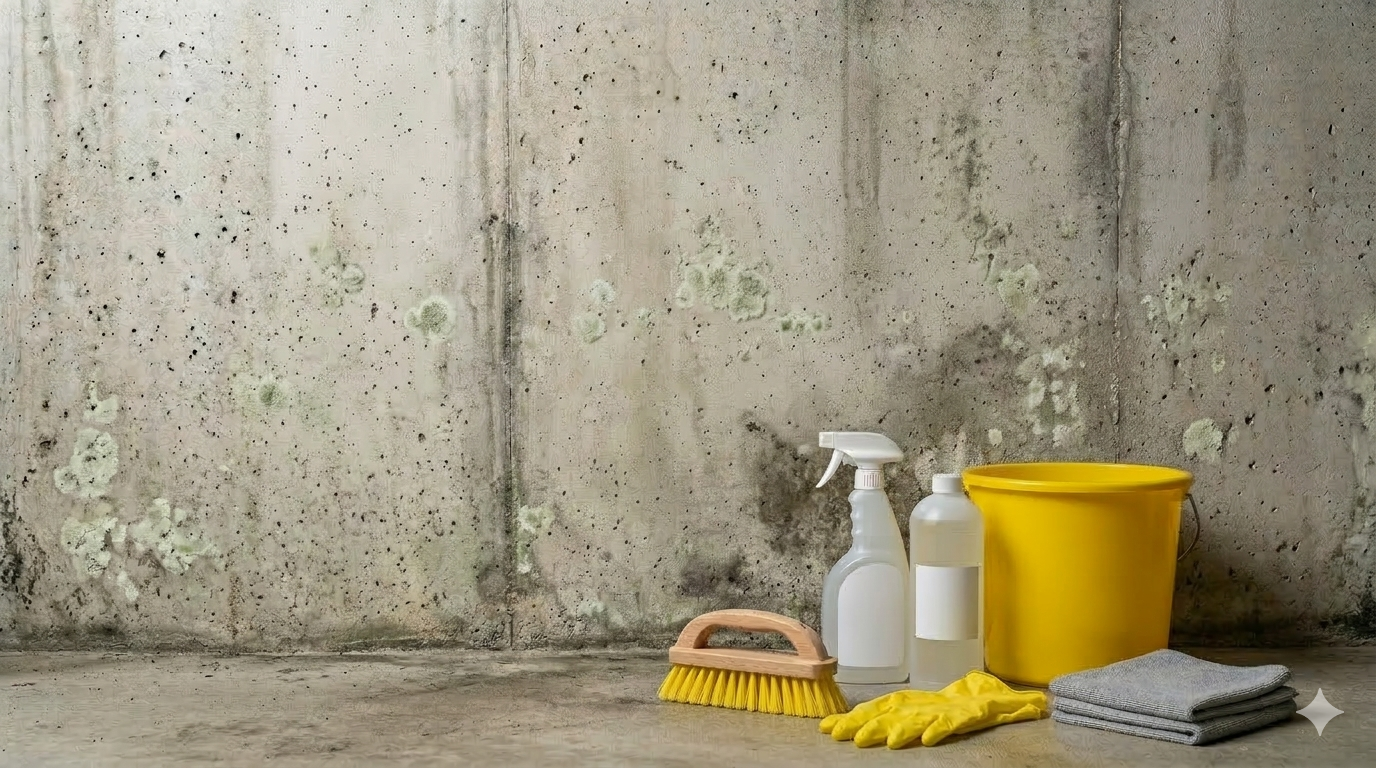
How to Clean Mould Off Walls Safely
Removing mould from walls requires a method that cleans the surface while helping prevent further spread. The following approaches are commonly used for smaller areas of mould growth.
Method 1: Vinegar-based Cleaning Solution
White vinegar contains natural acidic properties that help break down mould buildup on surfaces. It is commonly used as a household cleaning solution because it can penetrate porous materials such as paint and plaster.
Step-by-Step Cleaning Process
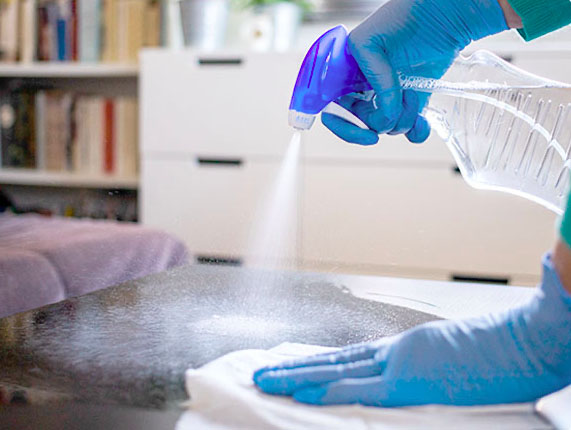
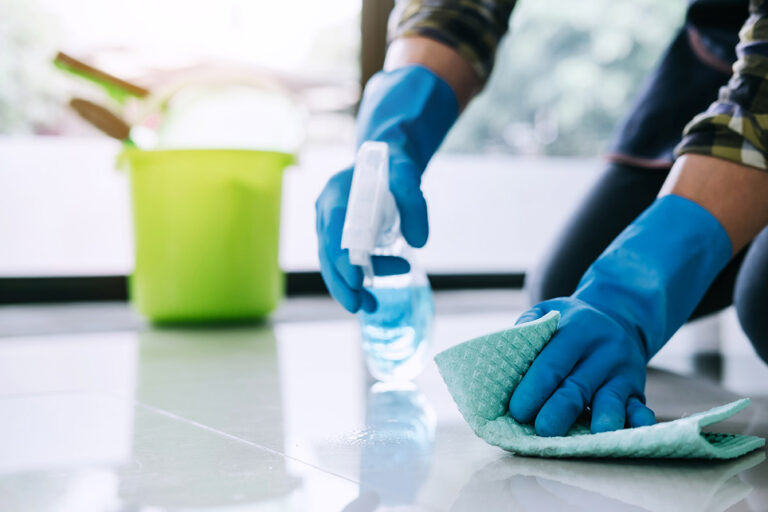
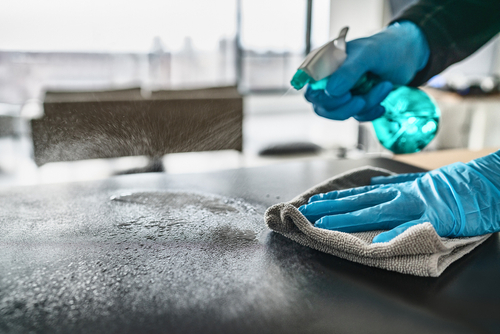
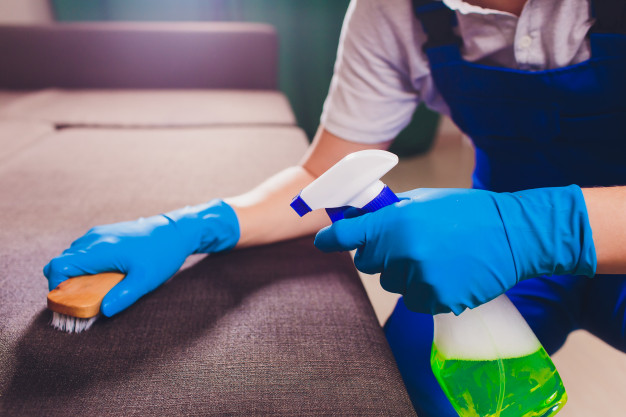
To clean mouldy walls using vinegar, begin by mixing equal parts white vinegar and water in a spray bottle. Apply the solution directly to the mould-affected area and allow it to sit for several minutes. This helps loosen the mould from the surface.
Afterwards, gently scrub the area using a soft brush or sponge. Once the mould residue has been removed, wipe the surface with a clean, damp cloth. The wall should then be dried thoroughly to prevent moisture from remaining on the surface.
Vinegar-based cleaning is often suitable for light mould growth that has not penetrated deeply into the wall surface.
Method 2: Baking Soda Solution
Baking soda provides a mild cleaning solution that helps lift mould from surfaces without damaging paint or plaster. It also assists in neutralising lingering odours associated with mould growth.
Step-by-Step Cleaning Process
Create a mixture by dissolving baking soda in warm water. Apply the solution to the affected area using a cloth or sponge. After allowing it to sit briefly, scrub the surface gently to remove mould buildup.
Once cleaning is complete, wipe the wall with a damp cloth to remove residue and dry the surface thoroughly.
This method is particularly useful for delicate surfaces where stronger cleaning agents may not be appropriate. It also leaves the area free from strong chemical smells.
How to Prevent Mould From Coming Back
Preventing mould is different from removing it. Cleaning addresses what is already visible, while prevention focuses on changing the conditions that allowed it to grow in the first place. For longer-lasting results, here are some measures you could do:
Control Indoor Moisture
Excess dampness gives mould the conditions it needs to return, which is why keeping surfaces and air less humid is one of the most important long-term measures. Areas exposed to regular steam or water should be allowed to dry properly instead of staying damp for extended periods.
Improve Ventilation
Allow air to move through the space more effectively so that damp indoor air does not stay trapped. This is especially important in rooms that frequently feel stuffy or hold steam, as poor airflow can keep surfaces cooler and slower to dry. Better circulation helps moisture leave the room instead of settling onto walls, ceilings, and windows.
Dry Damp Areas Promptly
Treat leftover moisture as soon as it appears rather than allowing it to sit on surrounding surfaces. Water around windows, wall corners, counters, ceilings, and other affected areas should be dried before it has time to settle into finishes or nearby materials. Quick action helps prevent repeated damp exposure in the same spot.
Be Mindful of Furniture Placement
Leave space between large furniture and the wall so hidden sections of the room are not cut off from airflow. Wardrobes, cabinets, and bulky items placed too closely against cooler surfaces can trap moisture behind them, especially in corners or along external walls. A small gap can help those surfaces stay drier over time.
Avoid Overcrowding Enclosed Spaces
Keep cupboards, wardrobes, and storage areas from becoming tightly packed so air can still circulate inside them. When enclosed spaces are overloaded, humidity is more likely to build up and remain trapped around stored items and internal surfaces. Giving these areas breathing room makes them less likely to become damp without being noticed.
Address Early Signs Quickly
Respond as soon as you notice condensation, faint staining, musty odours, or small damp patches. These early signs often show that moisture is already collecting in the space, even if mould has not fully developed yet. Dealing with them promptly helps stop the conditions that allow mould to take hold.
When DIY Cleaning is Not Enough
Some situations go beyond what household treatment can realistically resolve. When the affected area continues to spread, returns soon after cleaning, or appears across several parts of the home, the issue is often more than a surface concern.
The same applies when paint begins to peel, staining shows through the finish, or the wall feels damp to the touch, as these signs may point to deeper moisture problems within the material.
A more careful response is also needed when growth affects porous surfaces such as drywall, wood, fabrics, or carpets, since these materials can hold contamination beyond what is immediately visible.
In cases like these, simple cleaning may improve appearance for a time without fully dealing with the condition underneath. Once the problem becomes recurring, more extensive, or tied to damaged materials, professional assessment is usually the more reliable next step.
Importance of Professional Mould Cleaning
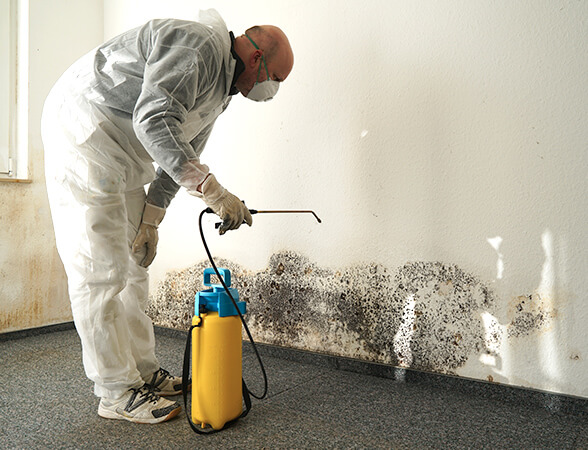
Repeated growth on walls or ceilings often points to a condition that needs more than surface treatment. Professional mould cleaning becomes important when the problem keeps returning, affects a wider area, or appears tied to dampness that has not been properly addressed.
A professional approach also helps ensure the affected area is handled more thoroughly, with attention to both visible growth and the conditions supporting it. This makes it a more reliable option when simple cleaning no longer provides lasting results.
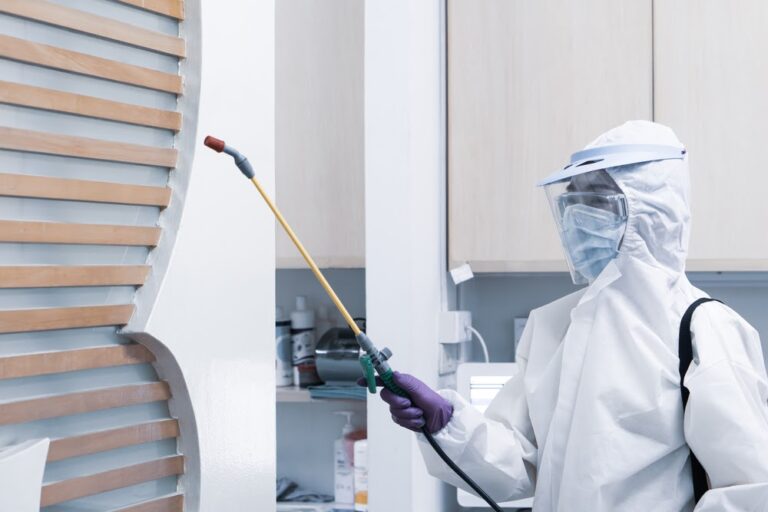
In our work, addressing mould involves looking beyond what appears on the surface. Areas affected by repeated growth are approached through more careful assessment and targeted cleaning methods, which is why situations involving persistent contamination are often handled through a dedicated mould remediation process.
Keeping Your Home Mould-Free
A home should feel fresh, comfortable, and well cared for. When moisture is managed properly, and early signs are addressed with attention, walls and living spaces are far less likely to develop persistent mould problems. Consistent care helps protect both the condition of the property and the comfort of the people living in it.
If the problem becomes more persistent or extends beyond what household cleaning can manage, our team is here to help assess the situation and provide professional mould remediation suited to the condition of the space.
Frequently Asked Questions
Can mould spread to other rooms in the house?
Yes, spores can move through indoor air and settle on other damp surfaces in nearby rooms. If those areas also have moisture present, new patches may begin forming there.
Can repainting the wall solve the issue permanently?
Repainting only covers the visible stain on the surface. If the underlying moisture condition remains, the marks can eventually appear again through the paint.
How quickly can mould develop after moisture appears?
Growth can begin within 24 to 48 hours once a surface remains damp and warm. Visible spotting may appear within a few days if the moisture is not removed.
Are certain seasons more likely to cause indoor fungus issues?
Periods with higher humidity or reduced ventilation can make indoor spaces more prone to dampness. These conditions allow moisture to remain longer on walls and ceilings.
Is it possible for moulds to appear even in a clean home?
Yes, because the issue is mainly related to moisture rather than cleanliness. Even well-maintained spaces can develop patches if humidity or condensation persists.










































































































































Scan For a Free Quote
Looking for the best AC Duct cleaning service in Dubai?


